The Mantri Lab investigates the biology and applied potential of marine seaweeds, developing improved cultivation technologies that support coastal livelihoods and industry. Our research extends to seaweed-derived biostimulants for sustainable agriculture and to blue carbon, the role of seaweed farming in capturing and storing atmospheric carbon. Together these programmes work toward a productive, climate-resilient blue economy.
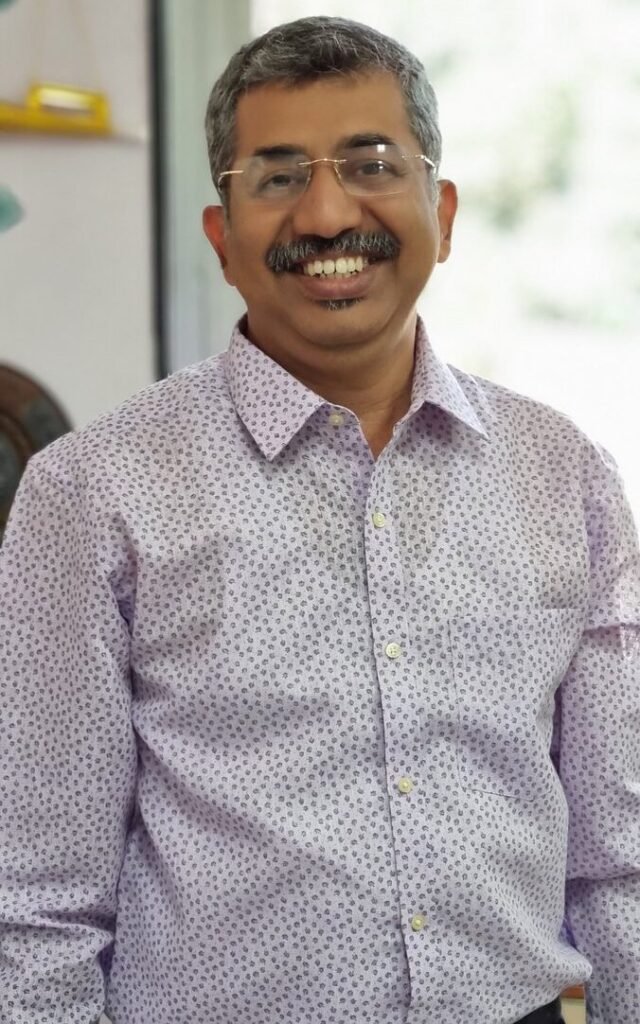
Dr. Vaibhav A. Mantri
Chief Scientist and Head, Applied Phycology and Biotechnology Division, CSIR – Central Salt and Marine Chemicals Research Institute
Read more about Dr. Mantri
Prof. Dr. Vaibhav A. Mantri is currently working as Chief Scientist at CSIR–CSMCRI, Bhavnagar. He has done commendable work in the field of Applied Phycology over the past 25+ years. This is evident from his extensive track record of over 200 publications and 3000+ citations. Prof. Mantri has handled several projects of national and international importance, and is currently leading a flagship programme, the “CSIR-Seaweed Mission”. The mission is strategically designed to identify and establish 100–120 suitable locations across India for commercial-scale seaweed farming. Besides, he was also instrumental in establishing the ‘National Facility for Marine Algal Herbarium’ in the country. His research played a pivotal role in establishing proof of relevance and proof of application of India’s first “Seaweed Seedling Production Facility” in a “Public-Private Partnership” at the Centre for Agriculture-Horticulture Development (M/s. Pidilite Industries). This technology was featured among the ‘Top 100 Indian Innovations’ in a Year Book of 2023.
Prof. Mantri has developed and deployed several novel seaweed cultivation techniques that have transformed the industry. His innovations include the tube net method, which was later successfully adopted by commercial farmers in India, enabling scalable and efficient farming. The triangular raft method was introduced for the first time in the world and later adopted in Bangladesh, demonstrating global applicability. The low-cost seaweed harvester is patented [US 9,736,984 B2], while a mechanized version was subsequently adopted by industries in India and Indonesia. A vertical raft alignment was designed for commercial farming to reduce epiphytic infestations and disease onset, improving yield stability. Under his leadership, the initiative integrates scientific innovation with practical deployment, ensuring that seaweed cultivation becomes a sustainable livelihood option while contributing to industrial growth and environmental resilience.
Dr. Vaibhav has been recognized with two of India’s most prestigious scientific honours for his contribution in the domain of seaweed biotechnology. He received the Award for S&T Innovations for Rural Development (CAIRD, 2013), instituted by CSIR, as a key team member. Later, in 2020, he was honoured with the Biotech Product, Process and Development and Commercialization Award, instituted by the Department of Biotechnology, as a key team member, for the innovative cultivation protocols for Gracilaria dura and the development of efficient agarose extraction methods. Further, he was awarded the Prof. V. Krishnamurthy Endowment Award in its inception year 2026, instituted by the ‘Seaweed Research Utilization Association, India’, as well as the ‘Professor YSRK Sarma Memorial Award-2026’ [Phycology, Cyanobacteria & Algal Biotechnology], instituted by the ‘Society for Plant Research’, India. These awards underscore his ability to translate fundamental research into scalable technologies, bridging science with industry and rural development. Prof. Mantri has delivered a talk at the ‘Science Summit’ at the United Nations General Assembly in 2025 and has been featured in Stanford University’s 2025 list of the world’s top 2% scientists.
Our research
🌱
Cultivation technology
🧪
Biostimulants
🌊
Blue carbon
🔬
Taxonomy & phylogenetics
Watch Our Research in Action
A glimpse into the science driving sustainable seaweed research